
Credits and Disclaimers
All of the information about the Rockne’s on this website came from a Turning Wheels article (December 2004) written by Fred Fox.
Some of my own thoughts may have filtered in as I re-wrote the information to shorten what was contained in the original article.
The charts are also from that article, but if there are any errors made during the transition to tables on this website, they are mine. If you see any, please contact us using the “Contact Us” page of this website.
This is how the story of the Rockne starts. It’s 1930 and Studebaker has just closed the books on the not so successful Erskine line. The final model of the Erskine, the model 53 has been re-named and re-badged as the Studebaker Six. However, Mr. Erskine, president of Studebaker Corporation, still thinks Studebaker needs a car in the low priced field. The depression is getting into full swing and low priced cars were about all anyone can afford. It is said, he thought this new car should be designed by an outside firm and produced as a subsidiary company in the old E-M-F factory in Detroit. Wow, shades of the Erskine.
Enter former Dodge engineers Ray Cole and Ralph Vail. Cole and Vail had opened an independent Engineering Company and had been working with Willys-Overland to design a replacement car for the then dated Whippet. W-O had approved the new car design they had proposed and they had been commissioned to build two pilot models, a four door and a two door sedan. However, by the time Cole and Vail finished the models, while W-O’s board liked the cars, they lacked the funds to put the new car into production. Cole and Vail then asked W-O if they could keep the pilot cars, along with the design rights. This was granted to them by the W-O. Now they had a car design and two pilot cars, but no customer.
With nothing to do, Cole and Vail decided to take a break and each headed home from Toledo, Ohio. Cole to Ohio and Vail to Indiana. Each was driving one of the Pilot cars. On his way to his farm in Michigan City, Indiana, Vail was driving right by Studebaker at South Bend, so he decided to stop and see if Studebaker had any interest in their car. We know that Albert Erskine was looking for a new light car to produce and apparently Vail drove it right up in front of the Studebaker administration building. The story that has been told, would have Albert Erskine, so impressed with the Cole-Vail car, he agreed to hire Vail and Cole and put their car into production.
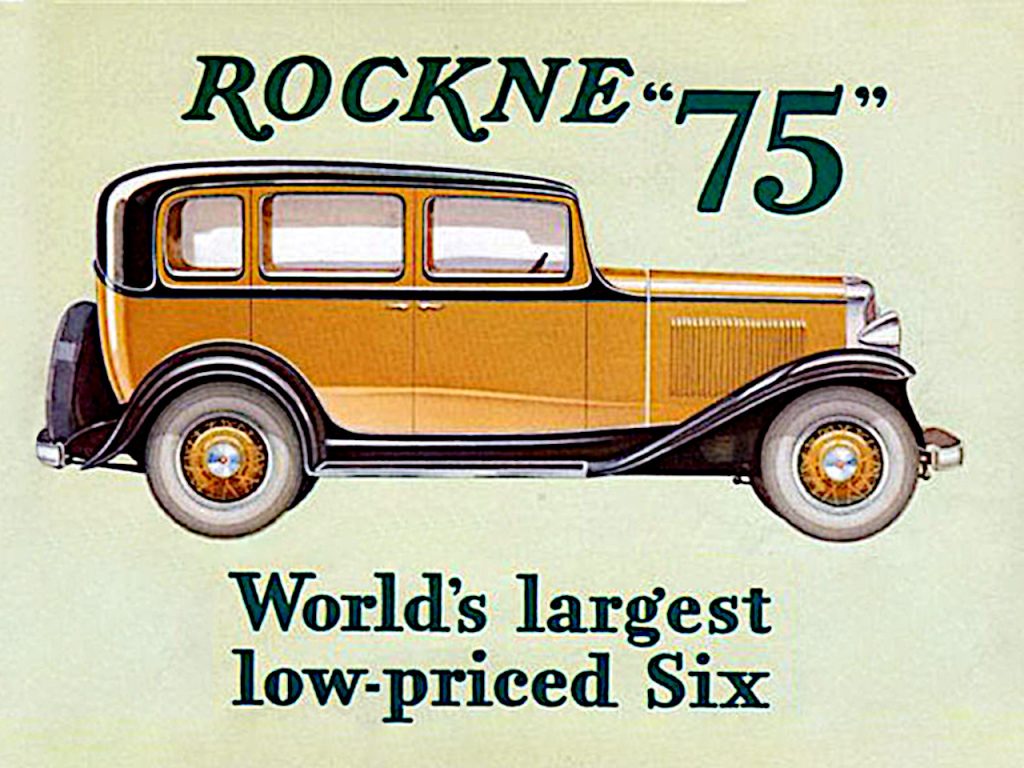
Now, Erskine has a problem, Barney Roos, Studebaker’s chief engineer has been completely left out of the loop. Roos, being cantankerous to say the least, is not going to be happy. The solution, have Roos design a somewhat larger companion car. This car would become the Rockne “75” Model 41. Roos was not given much money to work with, so the larger car would start out using the 1931 “Studebaker Six”. It would be fitted with a new radiator shell, new front fenders, and the sun visor removed. This car would be produced in South Bend for the newly formed, wholly-owned, Studebaker Subsidiary, called the “Rockne Motors Corporation of Detroit, Michigan”.
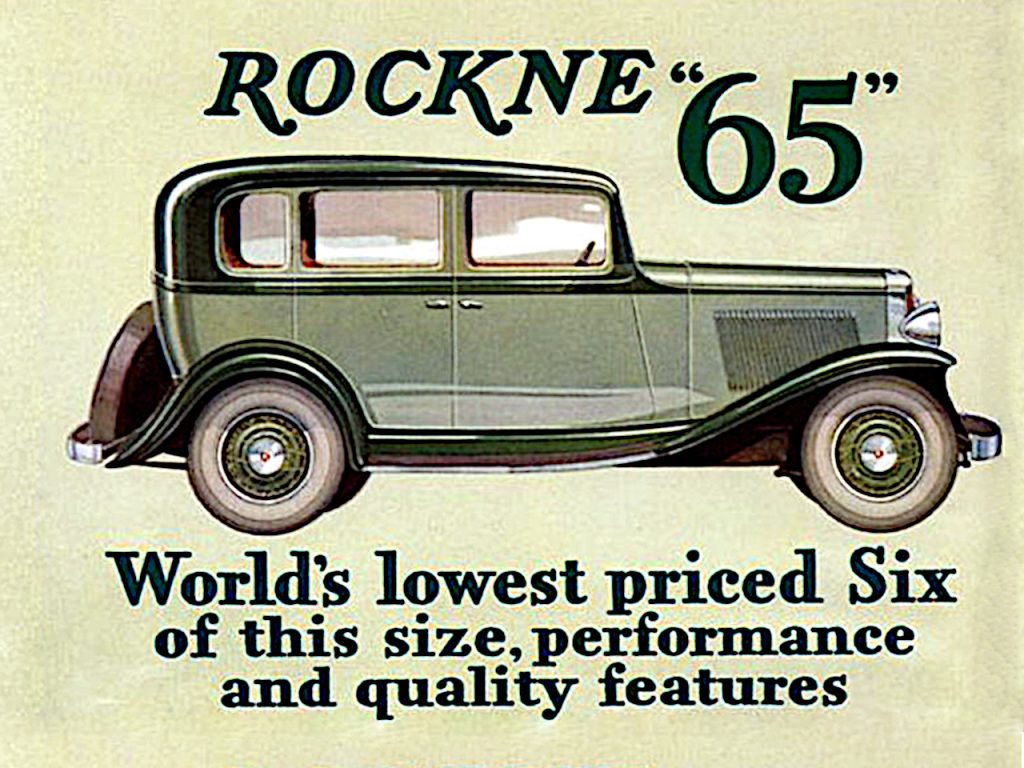
The Cole-Vail car would be called the Rockne “65” model 30 and be produced in Studebaker’s old EMF plant in Detroit. To avoid any confusion the following summery about the Rockne naming convention needs to be addressed. The Rockne cars were named Rockne “65” and Rockne “75”, the latter being the companion car by Roos and the first being the Cole-Vail car. These are the names we expect would have been used year over year, like “President”, “Commander” and so on. The model code number, Model 30 for the Cole-Vail car and Model 41 for the Roos companion car, would change each year. So we would have expected the 1933 Models to be Model Code 31 and Model Code 42 respectively. Because the Rockne had a very short life, due to Studebaker’s 1933 bankruptcy, here is what the 1932 – 1933 Studebaker line-up actually looked like.
Model Code Numbers were used by Production, Model Names by sales.
1932 Model Code | 1932 Model | 1933 Model Code | 1933 Model |
|---|---|---|---|
30 | Rockne “65″ | 31 | Rockne “10” |
41 | Rockne “75” | 41 | Rockne “75” |
55 | Studebaker Six | 56 | Studebaker Six |
62 | Dictator | 73 | Commander |
71 | Commander | 82 | President |
91 | President | 92 | Speedway President |
It is thought that the Rockne “65” & “75” used those numbers because they represented their approximate respective engine horsepower rating. Where “10” for 1933 came from is anyone’s guess. Note that while the “Rockne 65” model code number did change from 30 to 31 as expected, the “Rockne 75” model code number remained the same. Most believe that the “Rockne 75” was de-emphasized and did not even show up in most Rockne promotions. It is thought that because the car remained essentially the same, the model code remained the same. Some think the “75” was not produced in 1933, but it clearly was in production through June of 1933.
Rockne Engine
Both the Rockne models were powered by Studebaker L-head six engines. The “75” by Studebaker’s 205.3 cubic inch six, was formally used in the 1931 Studebaker Six. The 1932 Studebaker Six would use a longer stroke 230.2 cubic inch six. The “75” Rockne engine would make about 72 HP.
The “65” would use an all new design six. This engine would be the third to last new engine to be designed by Studebaker. Only the 1939 Champion six and the 1951 Studebaker V-8 would be designed later. This new engine would power Studebaker’s for the next 28 years. When the engine design was discontinued, it was making 118 HP, 52 more HP then where it began in 1932. It would be one of the longest produced engines in American vehicle production.
Model | Year | Cubic Inches |
|---|---|---|
Rockne “65”/”10” | 1932 – 1933 | 189.8 |
Dictator | 1934 – 1935 | 205.3 |
Dictator | 1936 – 1937 | 217.8 |
Commander | 1938 – 1948 | 226.2 |
Commander | 1949 – 1950 | 245.6 |
Commercial | 1933 – 1960 | Various |
Rockne Body Style, Body Code, Trim, & Price Specifications
Both Rockne’s used Studebaker’s free-wheeling and automatic Startix starting system. The Rockne “65” was generally thought to be a significant improvement over the original Erskine of 1927 and was well received by the motoring press. It was priced somewhat higher then Chevrolet, Ford, and Plymouth, but Studebaker was hoping it would be a sales success and it was as 23,709 Rockne’s were sold. Not as many as Erskine would have liked, but not bad for the depression years. It out sold every other Studebaker Model.
Rockne “65” 1932
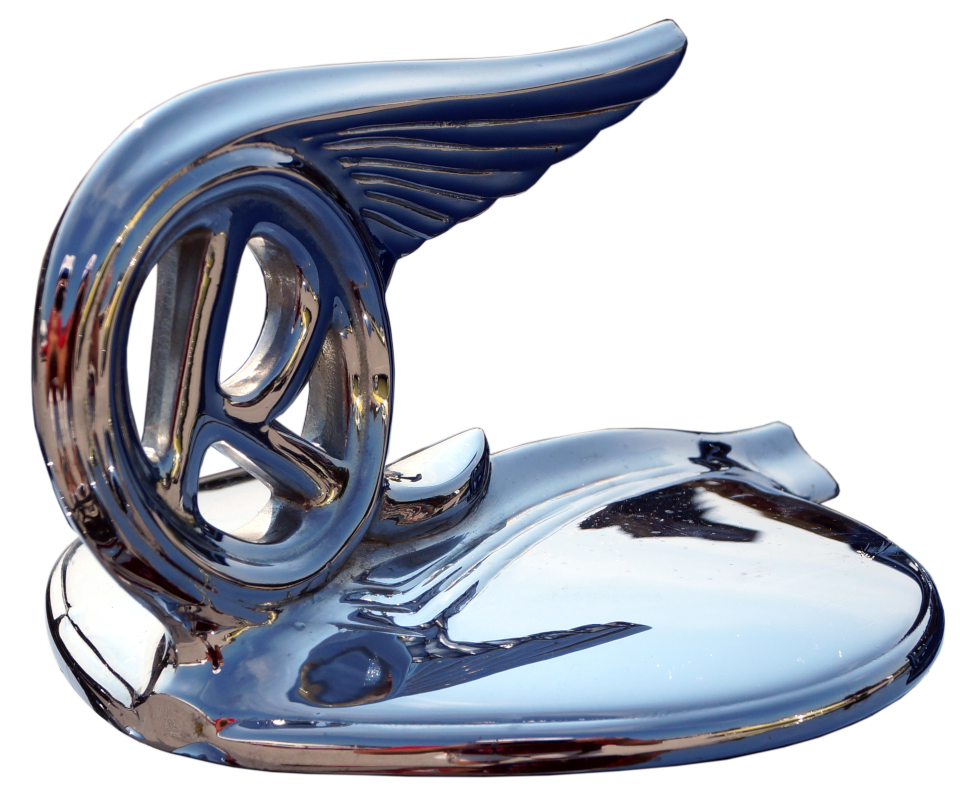
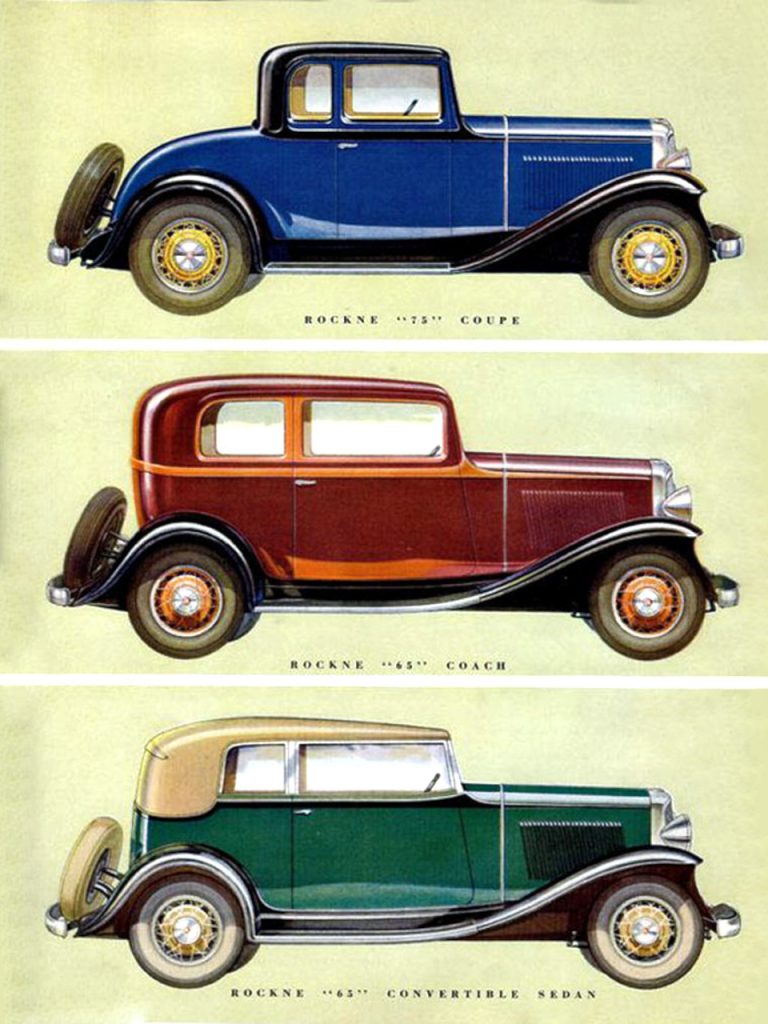
The 110 inch wheel base Cole-Vail Rockne “65” went into production on February 22nd, 1932 and was offered in five body styles in two trim levels, four-door sedan, coupe, coach (two-door sedan), convertible sedan, and convertible roadster. The two door couple was offered with or without rumble seat, while the roadster always had a rumble seat. The trim levels were Regular (Standard) and DeLuxe. Wire wheels were used on all models. DeLuxe cars came standard with duel side mounts and the flying “R” hood ornament.
Rockne “65” 1932 Chart
Body Type | Trim | Body Code | List Price | Weight (lbs.) |
|---|---|---|---|---|
4 door sedan | Regular | W1 | $635.00 | 2595 |
4 door sedan | DeLuxe | W2 | $680.00 | 2675 |
Coupe | Regular | Q1 | $585.00 | 2495 |
Coupe | DeLuxe | Q2 | $630.00 | 2595 |
Rumble Seat Coupe | Regular | Q3 | $620.00 | 2550 |
Rumble Seat Coupe | DeLuxe | Q4 | $665.00 | 2615 |
Coach 2 door sedan | Regular | F1 | $595.00 | 2520 |
Coach 2 door sedan | DeLuxe | F2 | $640.00 | 2610 |
2 door Convertible Sedan | Regular | S1 | $695.00 | 2645 |
2 door Convertible Sedan | DeLuxe | S2 | $740.00 | 2740 |
Convertible Roadster | Regular | R1 | $675.00 | 2555 |
Convertible Roadster | DeLuxe | R2 | $720.00 | 2635 |
Rockne “75” 1932
The 114 inch wheel base Roos Rockne “75” went into production December 15th, 1931 and was offered in two body styles, four-door sedan and a coupe. The 1932 “75” sales literature had an illustration of a convertible roadster and mentions a convertible sedan, but they were never produced. Like the “65” the “75” was offered in regular and DeLuxe trim, and the coupe could be had with or without rumble seat.
Rockne “75” 1932 Chart
Body Type | Trim | Body Code | List Price | Weight (lbs.) |
|---|---|---|---|---|
4 door sedan | Regular | W1 | $735.00 | 3000 |
4 door sedan | DeLuxe | W2 | $780.00 | 3085 |
Coupe | Regular | Q1 | $685.00 | 2825 |
Coupe | DeLuxe | Q2 | $730.00 | 2895 |
Rumble Seat Coupe | Regular | Q3 | $720.00 | 2885 |
Rumble Seat Coupe | DeLuxe | Q4 | $765.00 | 2945 |
The Rockne “10” & “75” 1933
The 1933 body styles for both Rockne’s remained the same. The “65” was renamed to the “10” and now had a Panel Delivery and Commercial Chassis offering. The “10” body was lengthened to create a little more room inside, the overall height was reduced by one inch, mainly due to the use of 17 inch wheels in place of the 18 inch wheels of 1932, the front fenders were modified, and the HP was increased to 70 by increasing the compression ratio to 5.5:1.
Rockne “10” 1933 Chart
Body Type | Trim | Body Code | List Price | Weight (lbs) |
|---|---|---|---|---|
4 door sedan | Regular | W1 | $615.00 | 2625 |
4 door sedan | DeLuxe | W2 | $660.00 | 2700 |
Coupe | Regular | Q1 | $585.00 | 2495 |
Coupe | DeLuxe | Q2 | $630.00 | 2595 |
Rumble Seat Coupe | Regular | Q3 | $620.00 | 2550 |
Rumble Seat Coupe | DeLuxe | Q4 | $665.00 | 2615 |
Coach 2 door sedan | Regular | F1 | $585.00 | 2520 |
Coach 2 door sedan | DeLuxe | F2 | $630.00 | 2610 |
2dr Convertible Sedan | Regular | S1 | $695.00 | 2645 |
2dr Convertible Sedan | DeLuxe | S2 | $740.00 | 2740 |
Convertible Roadster | Regular | R1 | $675.00 | 2555 |
Convertible Roadster | DeLuxe | R2 | $720.00 | 2635 |
Panel Delivery | Regular | $615.00 | 2810 | |
Commercial Chassis | Regular | $425.00 |
Rockne “75” 1933 Chart
Body Type | Trim | Body Code | List Price | Weight (lbs.) |
|---|---|---|---|---|
4 door sedan | Regular | W1 | $735.00 | 3000 |
4 door sedan | DeLuxe | W2 | $780.00 | 3085 |
Coupe | Regular | Q1 | $685.00 | 2825 |
Coupe | DeLuxe | Q2 | $730.00 | 2895 |
Rumble Seat Coupe | Regular | Q3 | $720.00 | 2885 |
Rumble Seat Coupe | DeLuxe | Q4 | $765.00 | 2945 |
Rockne “65”, “10”, “75” 1932 & 1933 Specifications Chart
| Description | Model 30 – 31 Rockne “65” & “10” | Model 41 Rockne “75” |
|---|---|---|
| Engine Type | L-head straight six | L-head straight six |
| Displacement (cu. in.) | 189.8 | 205.3 |
| Bore | 3.125 | 3.250 |
| Stroke | 4.125 | 4.125 |
| Horsepower (1932) | 66 @ 3200 rpm | 72 @ 3200 rpm |
| Horsepower (1933) | 70 @ 3200 rpm | 72 @ 3200 rpm |
| Torque (ft. lbs.) | 136 @ 1200 | 144 @ 1200 |
| Fuel tank | 12 gallons | 14 gallons |
| Wheelbase | 110” | 114” |
| Tire Size (1932) | 5.25 x 18 | 5.5 x 18 |
| Tire Size (1933) | 5.25 x 17 | 5.5 x 18 |
| Rear Axle Ratio | 4.4:1 | 4.73:1 |
| Ignition System | Autolite | Autolite |
| Clutch Type | Borg & Beck | Borg & Beck |
| Transmission, 3-speed | Warner Gear | Warner Gear |
Serial Numbers:
1932 Rockne “65” (Model 30) | |||
|---|---|---|---|
U.S. | Canada | ||
Start | End | Start | End |
000,001 | 016,132 | 960,001 | 960,728 |
1933 Rockne “10” (Model 31) | |||
|---|---|---|---|
U.S. | Canada | ||
Start | End | Start | End |
016,151 | 029,386 | 960,751 | 961,209* |
* Some sources list this as 961,299
1932 Rockne “75” (Model 41) | |||
|---|---|---|---|
U.S. | Canada | ||
Start | End | Start | End |
1,500,001 | 1,506,565 | 1,960,001 | 1,960,284 |
1933 Rockne “75” (Model 41) | |||
|---|---|---|---|
U.S. | Canada | ||
Start | End | Start | End |
1,506,566 | 1,507,002 | 1,960,285 | 1,960,322 |
The serial number is located on a plate riveted to the frame under the left front fender. The serial number for the Panel Delivery Cars and Commercial Chassis was prefixed with a “P”.
Engine Numbers 1932-33 Rockne
| Model | Start | End |
|---|---|---|
| 1932 Model 30 (Rockne “65”) | R-1 | R-16,975 |
| 1932-33 Model 41 (Rockne “75”) | B-101 | B-7,450 |
| 1933 Model 31 (Rockne “10”) | R-17,001 | R-30,700 |
Engine numbers on the Models 30 and 31 are stamped on top of the cylinder block on the left side above the distributor.
Engine numbers on the Model 41 are stamped on top of the cylinder block between the cylinder head and the water pump.
Production:
Model | U.S. | Canada | Total |
|---|---|---|---|
1932 “65” | 16,132 | 00,728 | 16,860 |
1932 “75” | 06,565 | 00,284 | 06,849 |
Total | 22,697 | 01,012 | 23,709 |
Model | U.S. | Canada | Total |
|---|---|---|---|
1933 “10” | 13,236 | 00,459 | 13,695 |
1933 “75” | 00,437 | 00,038 | 00,475 |
Total | 13,673 | 00,497 | 14,170 |
Grand Total | 36,370 | 01,509 | 37,879 |
1933 Rockne “10”’s were built in South Bend after Easter Weekend 1933.
Accessories:
See Mar/Apr 1985 Antique Studebaker Review for a very detailed listing of Rockne Accessories presented by Richard Quinn.
Other:
Salon horns that were accessories in 1932 became standard equipment on 1933 models, two on DeLuxe trim models and one left horn on Regular trim models.
However, because they were also available as extra cost items in 1932 their presence should not be used as an identification method between 1932 and 1933 models.