Studebaker Six 1930 to 1933, The seldom remembered cars

This series of Studebaker cars started life in early years of the the Great Depression, born from the remnents of the 1930 Erskine Model 53 and lasted through the 1933 Studebaker bankruptcy and in 1934 morphed into the all new for 1934 Dictator Six.

My initial thoughs about this series of Studebaker’s is “Why”.  It seemed to me that with the Great Depression in full swing, Studebaker has to many car models.

First, I have historical incite and know the depression is going to last a long time, Studebaker executives did not.  It’s also, somewhat easier to understand the Model 53,  the Erskine has not enjoyed a good reputation and to close it out would require using up the parts inventory.

Then, why the 1931/1932 Model 54/55 when the Rockne was on its way?  The answer seems is two fold, first it is speculated that the Rockne was to develop it’s own dealer network and secondly the Dictator would only be offered in 1931/32 as an eight.  Thus if not for the Studebaker Six, Studebaker dealers would not have had a Six car to sell.

The continuation to the Model 56 can be explained by the elimiation of the Dictator for the 1933 model year.

Click on year by year links below for more detailed information.

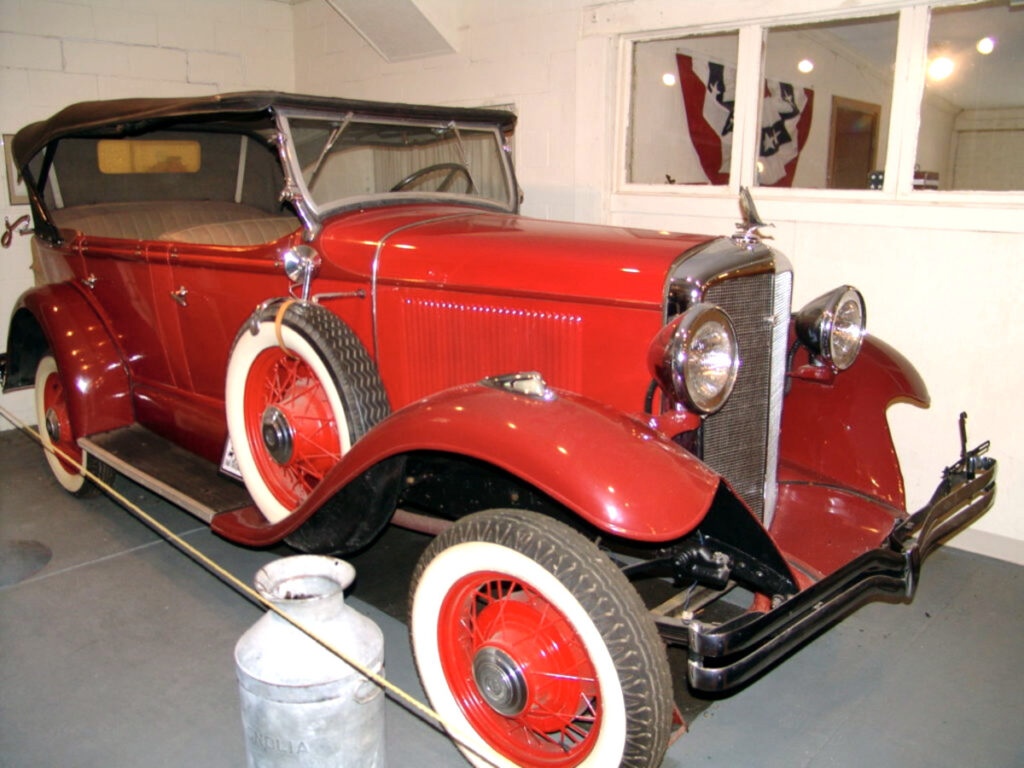
1930 Model 53

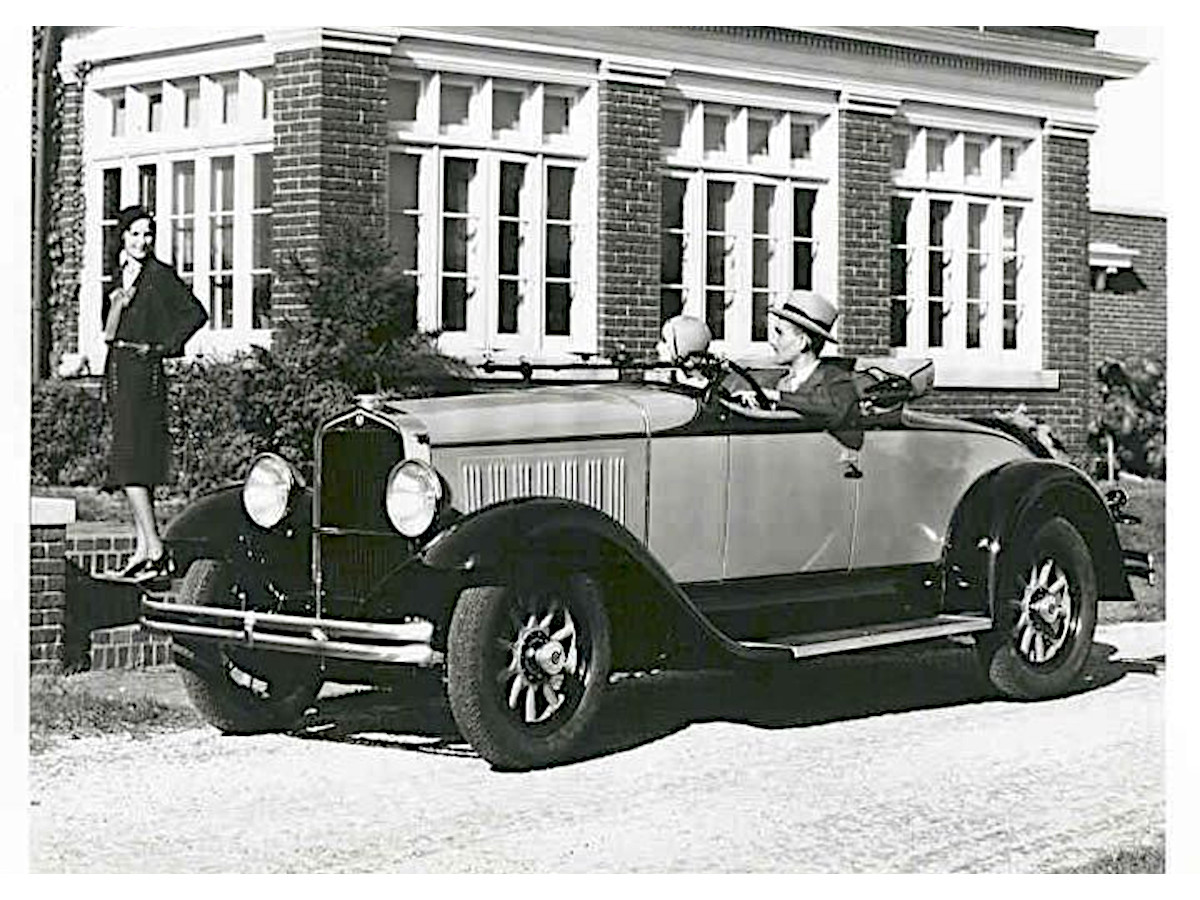
Roadster
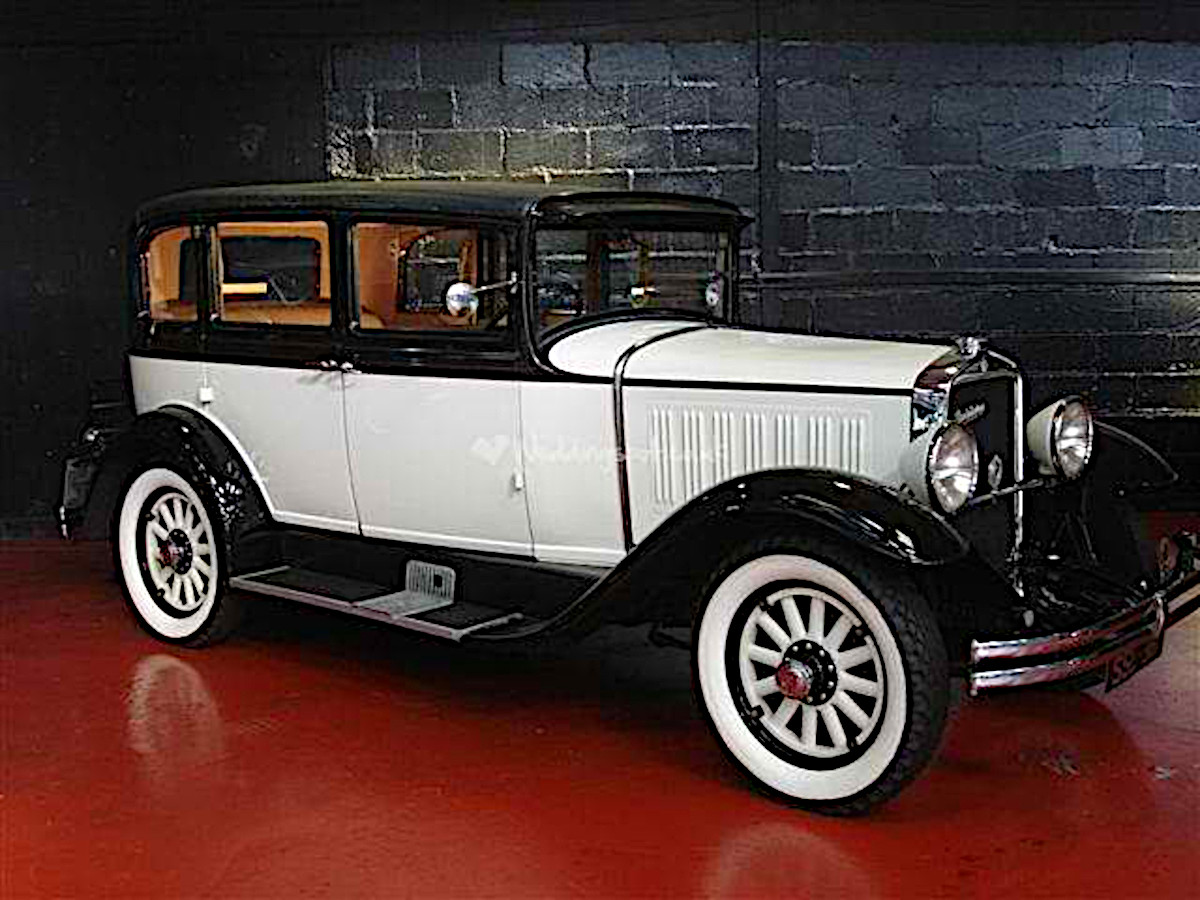
Sedan
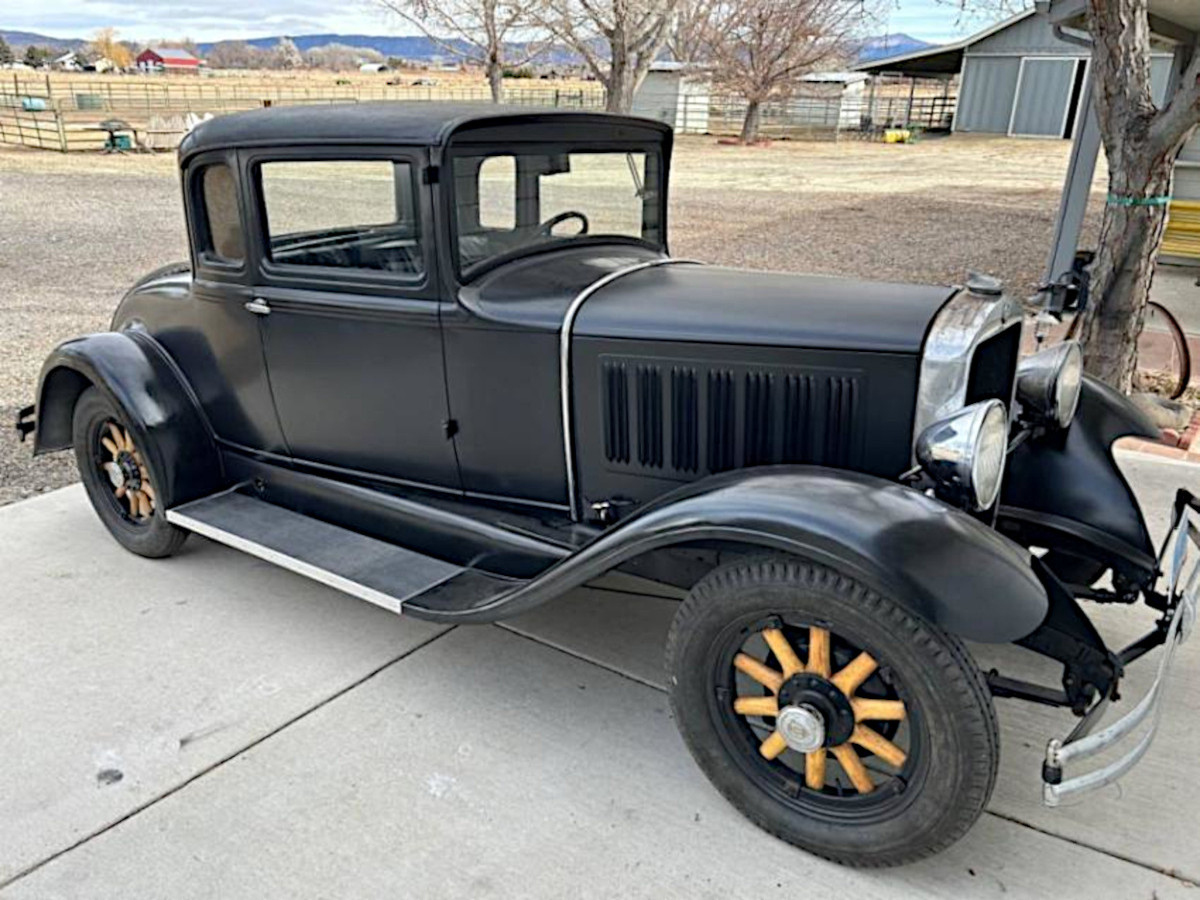
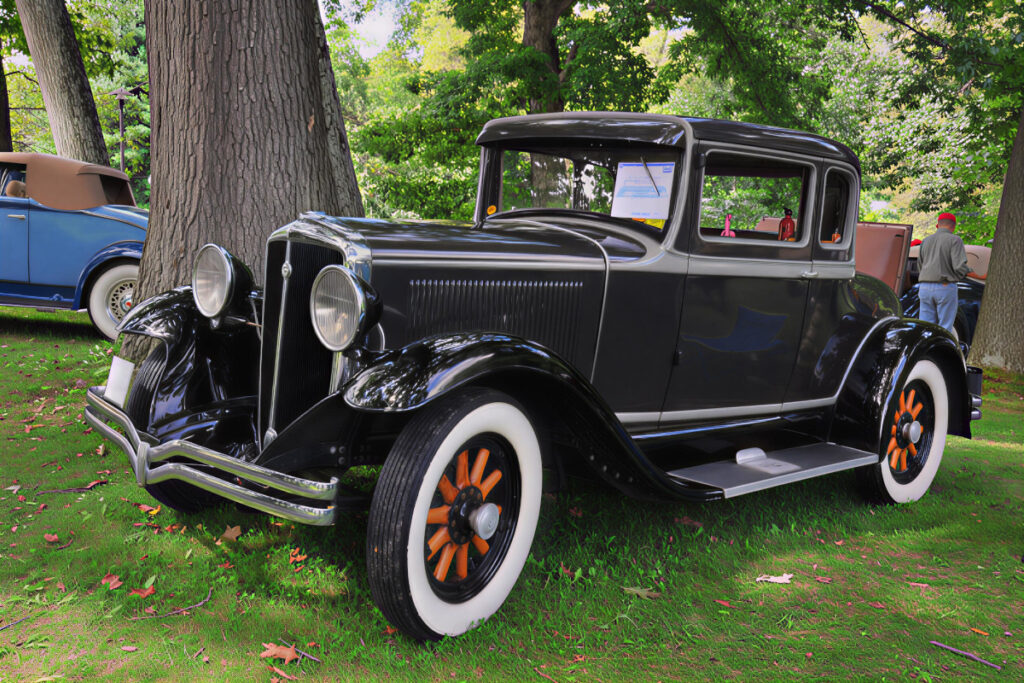
Coupe

The 1930 Studebaker Six Model 53, is born when a sudden and unpublished change is made where the Erskine 53 just becomes a Studebaker Six.  No model change is made and only the hubcaps, radiator name plate, and the prefix on the engine number changes as follows:

  • Hubcap “E” is changes to a block “S”.
  • The radiator Erskine Coat-of-arms is changed to a Studebaker Script
  • The engine pre-fix is changed from “E” to “S”

There were no real mechanical changes made.

According to the Ref. below this change came at serial number 5,085,001


Tells for 1930 Studebaker Six are the Seven pairs of three each louvers in the side hood.  However it is also good to know that 1929 Dictator 3rd design and 1930 Dictator GL Six also had this configuration.
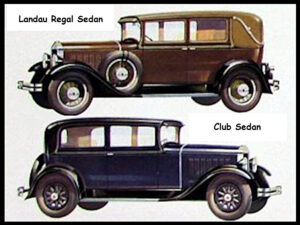
 

This is from a 1930 Erskine Sales Brochure

Photo’s are very hard to find as few of these cars have survived.  No touring, Landau Sedan, or Club Sedan was found.


References

  • Studebaker the Complete Story, by William A. Cannon and Fred K. Fox
SACA=Standard Catalog of American Cars – TCCD=The Classic Car Database

1930 Studebaker Six Model 53Body CodePrice Serial NumberEngine Serial Number
Studebaker Six production numbers are hard to come by as both the Erskine model 53 and Studebaker Six model 53 used the same serial number sequence.
Based on the serial numbers assigned maybe up to 11,000 Model 53’s could have been produced.
 From SCAC From TCCDSB 5,085,001 to 5,096,000
Can 5,951,500 to 5,952,200
S12,778 to 23,000
Touring 4 door 5 PassL1$965 $965  
Touring 4 door Regal 5 PasseL2$1,065 $1,065  
Coupe 2 door 2 Pass BusinessQ1$895 $895  
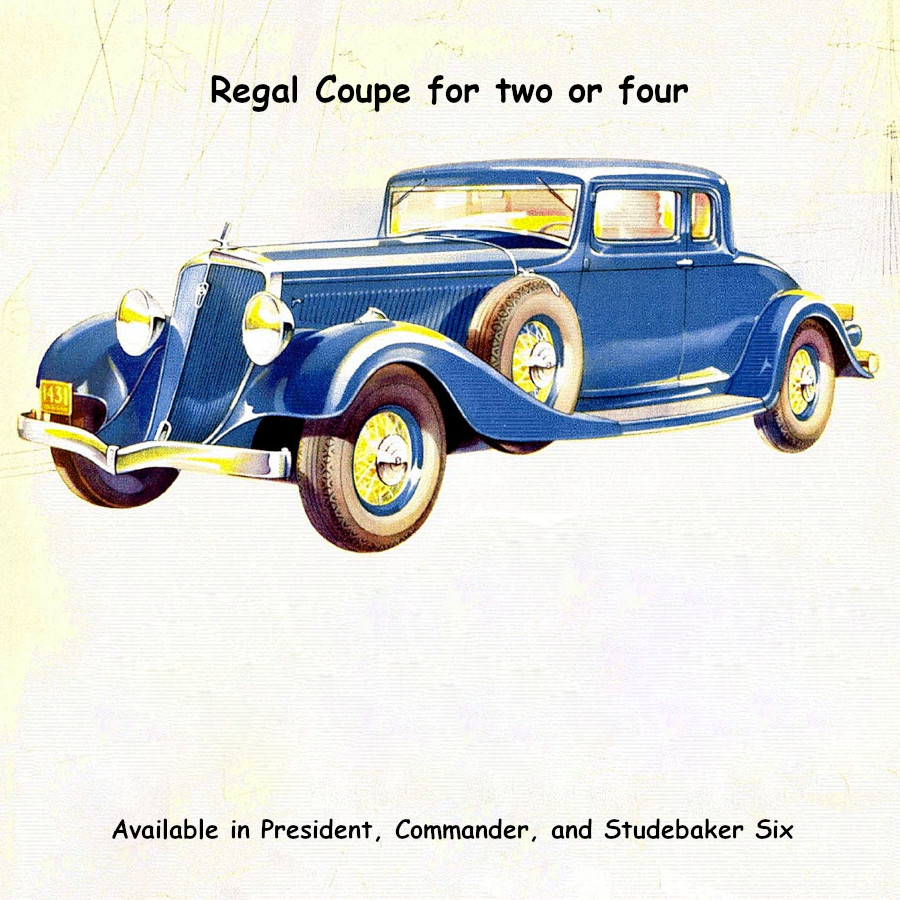
Coupe 2 door Regal 2/4 PassQ3$985 $985  
Sedan Club 2 door 5 PassF$935 $935  
Sedan 4 door 5 PassW1$985 $985  
Sedan Regal 4 door 5 PassW2$1,085 $1,085  
Sedan Landau 4 door 5 PassU$1,125 $1,125  
1930/1931 Model 53/54 Specifications 
Engine Straight Six CylinderL-head
Bore3 ¼ inch
Stroke4 1/8 inch
Displacement205.3 cu in
Power70 hp
CarburetorStromberg?
Transmission3 speed manual
Wheelbase114 inches

1931 Model 54

Regal Touring
Regal Sedan
Regal Roadster
Coupe

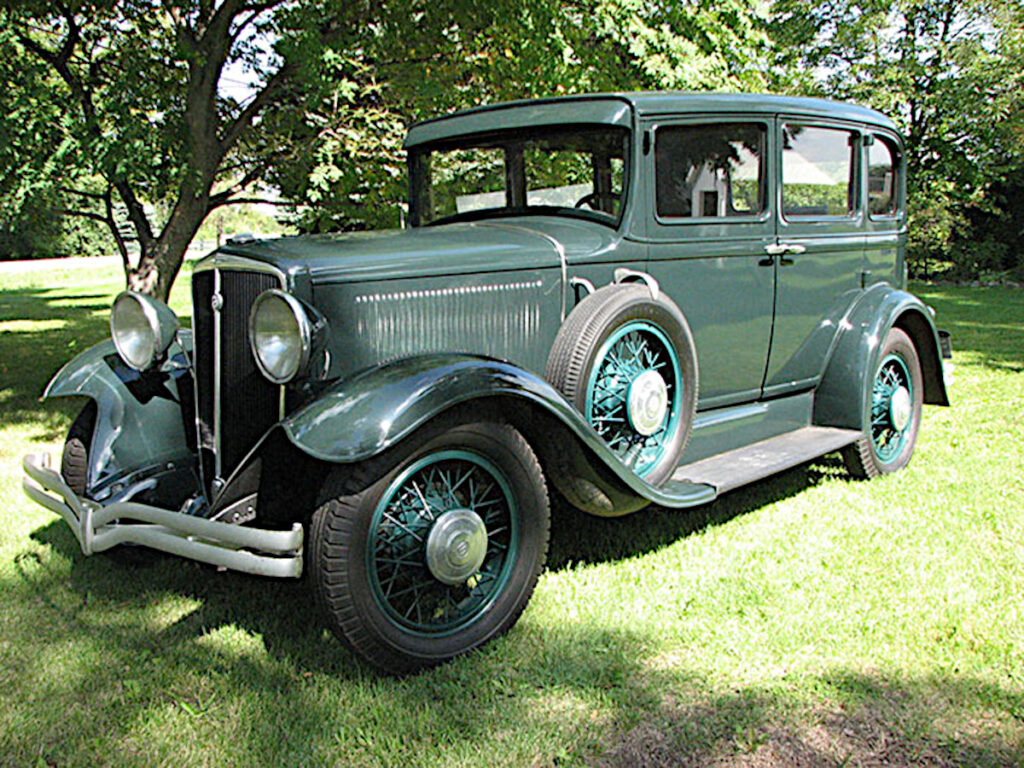
The model 54 Studebaker Six was introduced at the 1931 New York Automobile Show.  Body lines were changed to mimic the rest of the Studebaker cars that had been released earlier in 1930.  The model 54 would use duel bumpers, setting off from it’s other siblings and had round headlights instead of ovals.  New additions are free-wheeling, and a completely redesigned engine configuration.  However the engine changes did not effect the HP or displacement values.

Tells for 1931 Studebaker Six Model 54, gone is the seven sets of three louvers seen on the 1930’s, replaced by a more conventional louver configureation.  The double bar bumpers is still seen, however with a new deep vee in the center.

References
  • Studebaker the Complete Story, by William A. Cannon and Fred K. Fox
SACA=Standard Catalog of American Cars – TCCD=The Classic Car Database

1931 Studebaker Six Model 54Body CodePrice Serial NumberEngine Serial Number
Both SCSA & TCCD put Model 54 production at 23,917 units. From SCAC From TCCDSB 5,096,000 to 5,120,000
Can 5,952,201 to
5,593,301
S23,001 to 49,000
Roadster 2 door 2 PassR1$895 $895  
Touring 4 door 5 PassL1$895 $895  
Touring 4 door Regal 5 PassL2$970 $970  
Coupe 2 door 2 Pass BusinessQ1$845 $845  
Coupe 2 door Sport 2/4 PassQ3/Q5 1$895 $895  
Sedan 4 door 5 PassW1/W3 2$895 $895  
Sedan Regal 4 door 5 PassW2/W4 3$970 $970  
1 Q3 Mohair Trim Q5 Cloth Trim 2 W1 Mohair Trim W3 Cloth Trim 3 W2 Mohair Trim W4 Cloth Trim

1932 Model 55

Convertible Sedan
St Regis Brougham Sedan
Regal Sedan
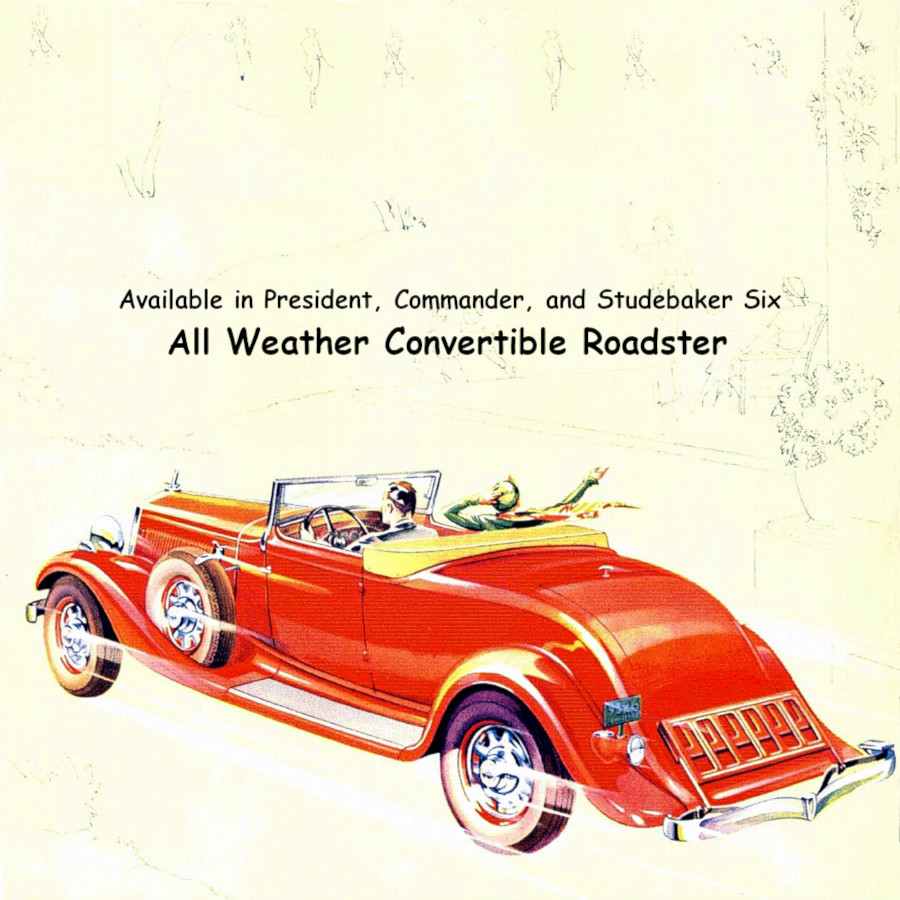
Regal Convertible Roadster

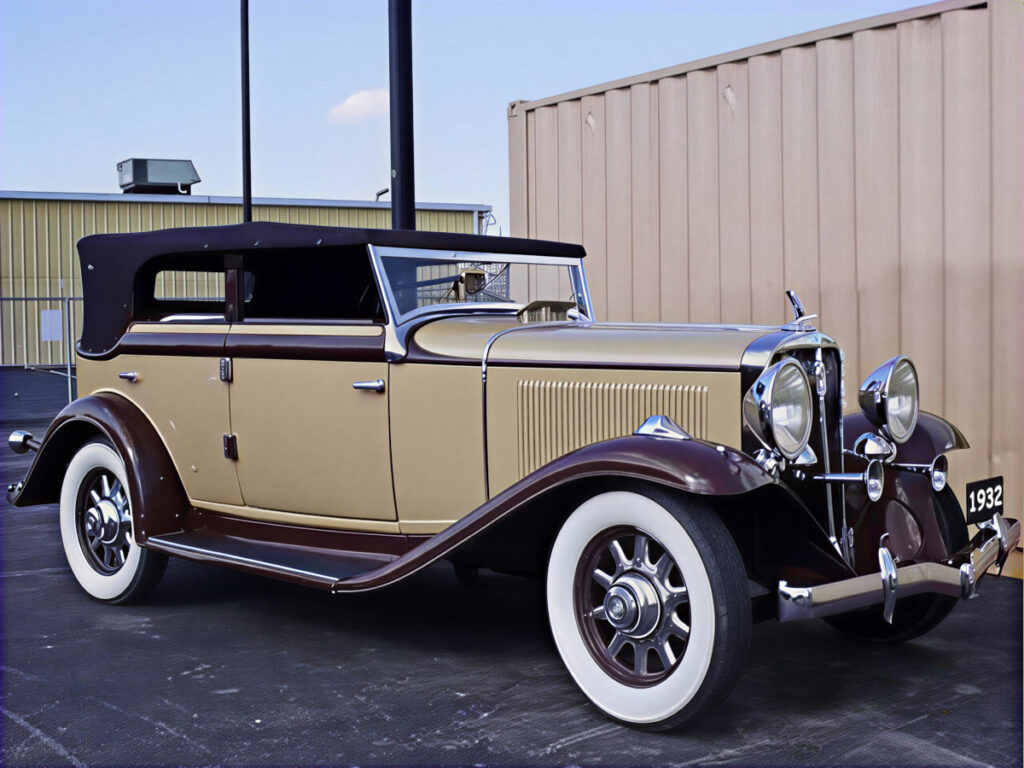
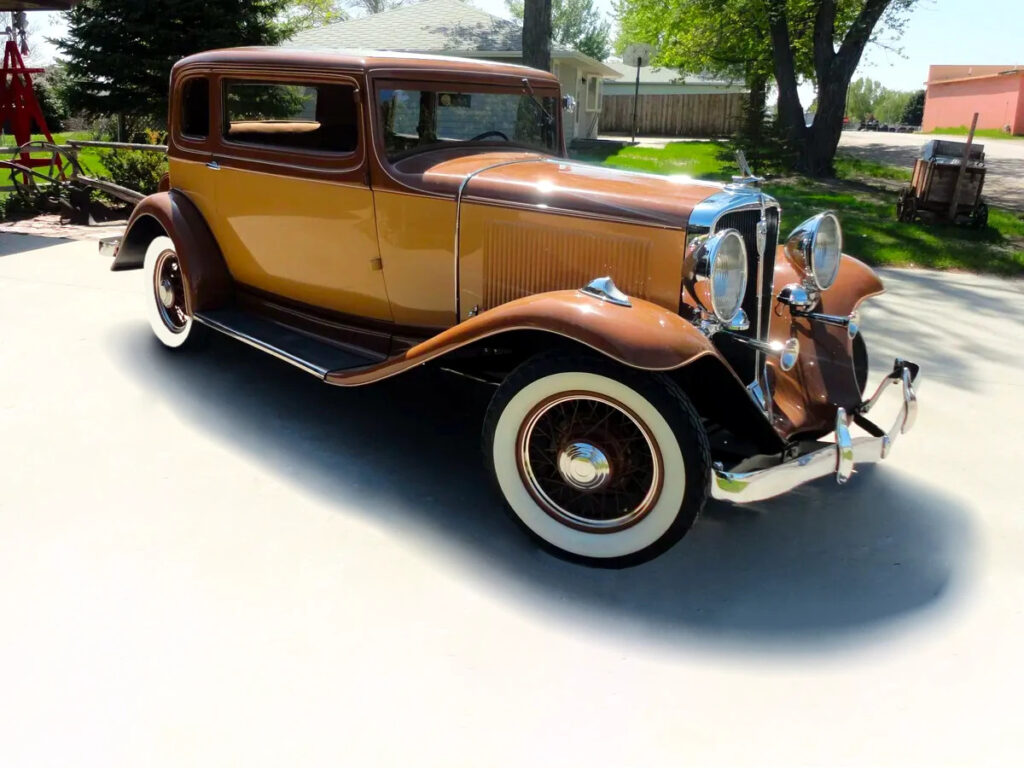
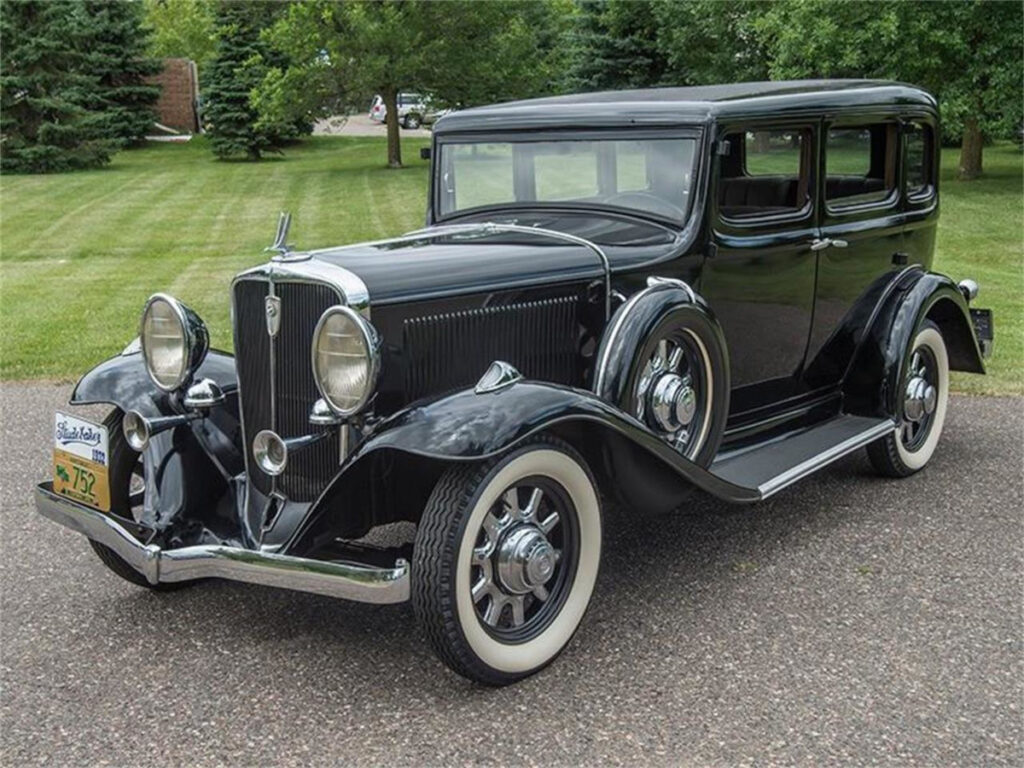
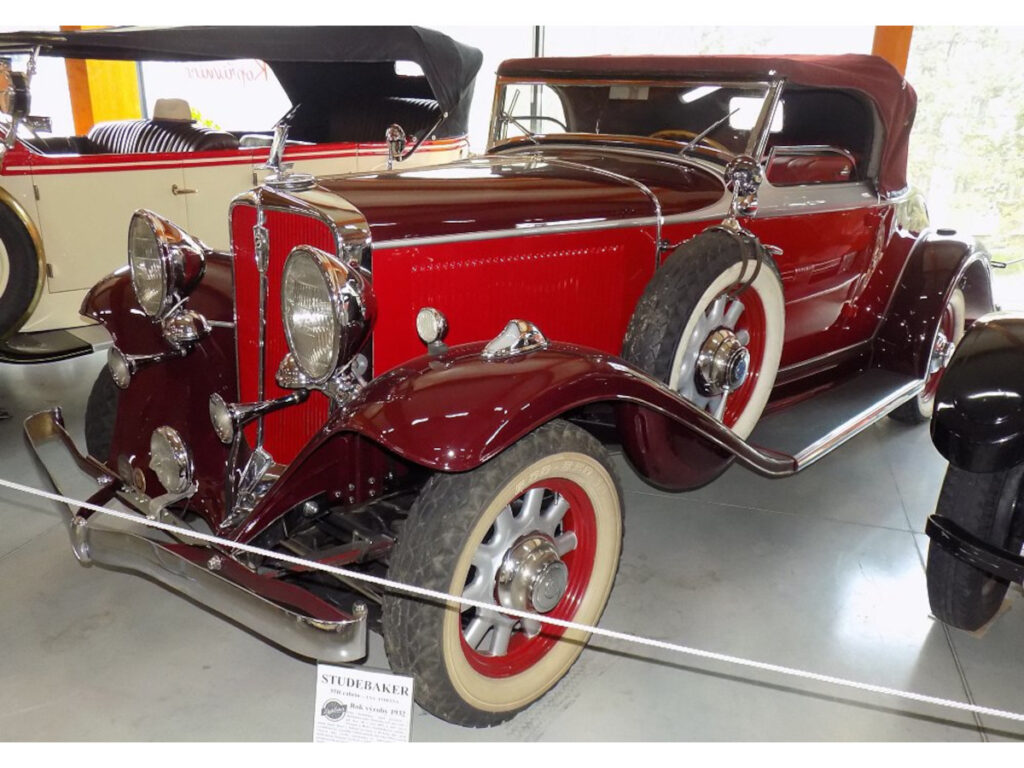
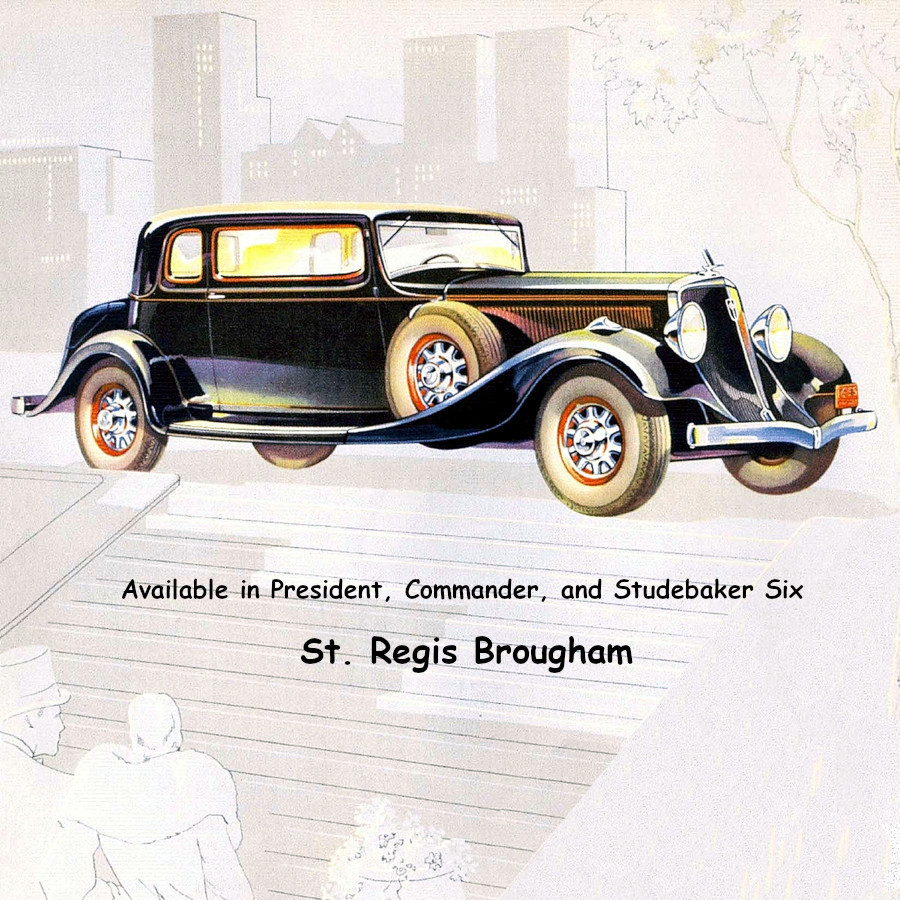
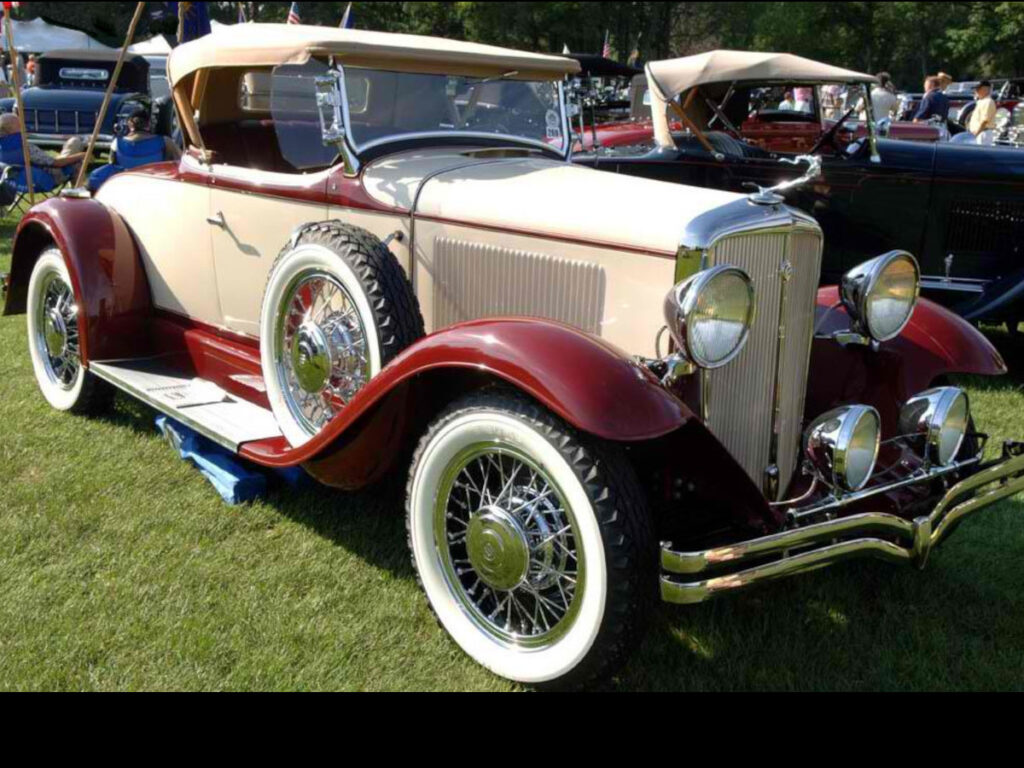
The 1932 Studebaker Six Model 55 was longer at 117 inches.  The Horsepower increased to 80 from 70.  New features, the Startix automatic starting system and safety glass are now standard equipment.  The front window gets more slanted, the visor is eliminated. The bumper is single bar as opposed to the former duel bar. A new St. Regis two door Brougham two door sedan and a convertible sedan are added to the offerings.  Missing in the photos is the Coupe and Sport Coupe.  It seems very few of these cars have survived.


Tells for the 1932 Studebaker Six Model 55 are single bar bumper and no visor over the windshield.

References
  • Studebaker the Complete Story, by William A. Cannon and Fred K. Fox
SACA=Standard Catalog of American Cars – TCCD=The Classic Car Database

1932 Studebaker Six Model 55Body CodePriceSerial
Number
Engine
Serial
Number
Both SCSA & TCCD put Model 55 production at 13,647 units. From
TCAC
From
Studebaker
Ads
From
TCCD
SB 5,120,000 to 5,133,400
Can 5,953,301 to
5,593,741
S49,001 to 63,000
Roadster Convertible 2 door 2/4 PassR1$915$915$915  
Roadster Regal Convertible 2 door 2/4 PassR2$1,020$1,020$1,020  
Coupe 2 door 2 PassQ1$840$840$840  
Coupe Regal 2 door 2 PassQ2$945$945$945  
Coupe Sport 2 door 2/4 PassQ3$890$890$890  
Coupe Regal Sport 2 door 2/4 PassQ4$995$1,095$995  
Sedan St. Regis Brougham 2 door 5 PassC1$915$915$915  
Sedan Regal St. Regis Brougham 2 door 5 PassC2$1,020$1,020$1,020  
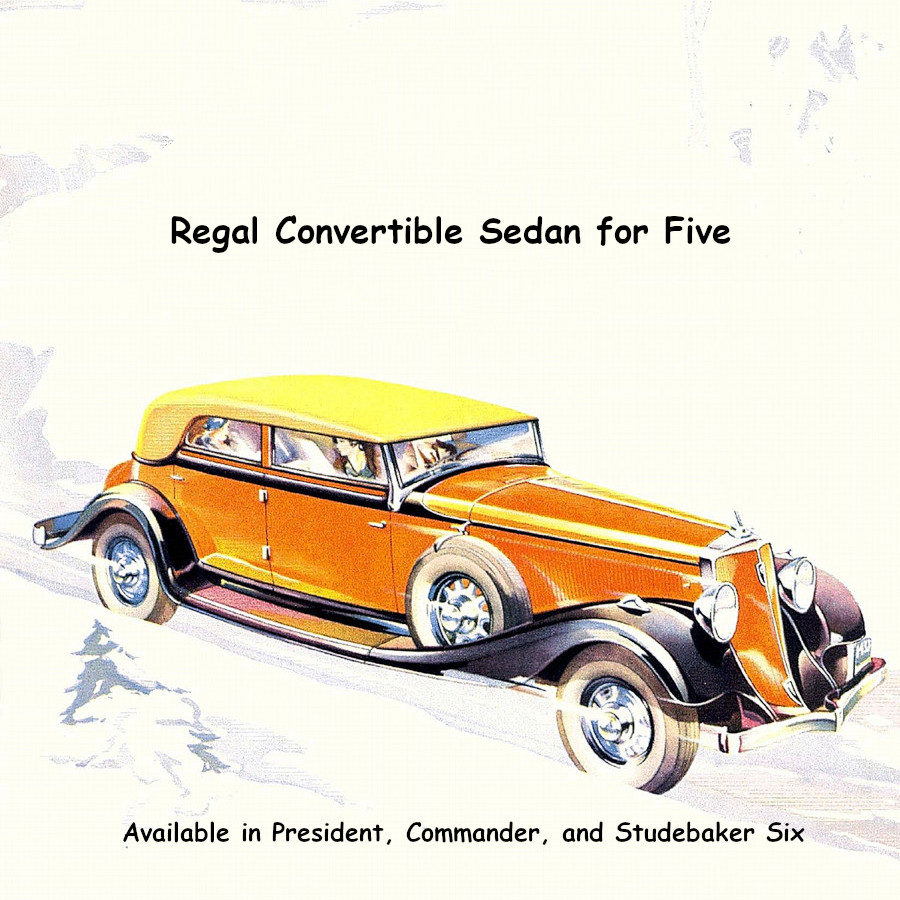
Sedan Convertible 4 door 5 PassS1$985$985$1,015  
Sedan Regal Convertible 4 door 5 PassS2$1,000$1,090$1,120  
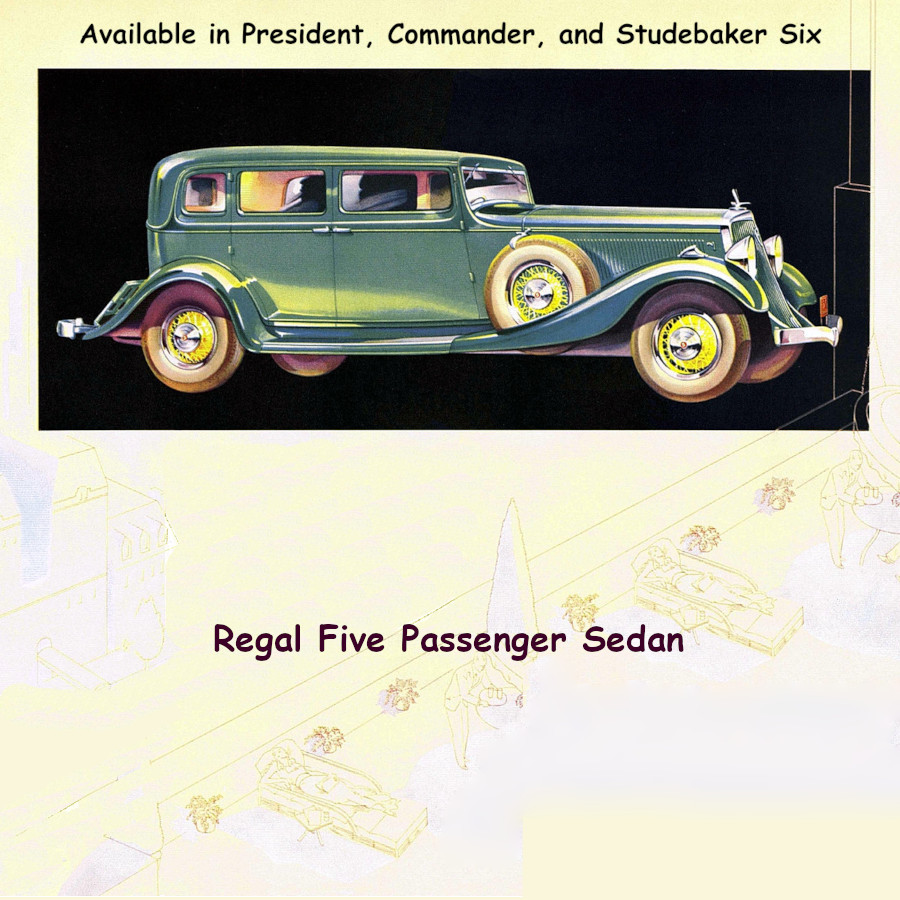
Sedan 4 door 5 PassW1$915$915$915  
Sedan Regal 4 door 5 PassW2$1,020$1,020$1,020  
1932/1933 Model 55/56 Specifications 
Engine Straight Six CylinderL-head
Bore3 ¼
Stroke4 5/8
Displacement230.2 cu in
Power80 hp
CarburetorStromberg?
Transmission3 speed manual
Wheelbase117 inches

1933 Model 56

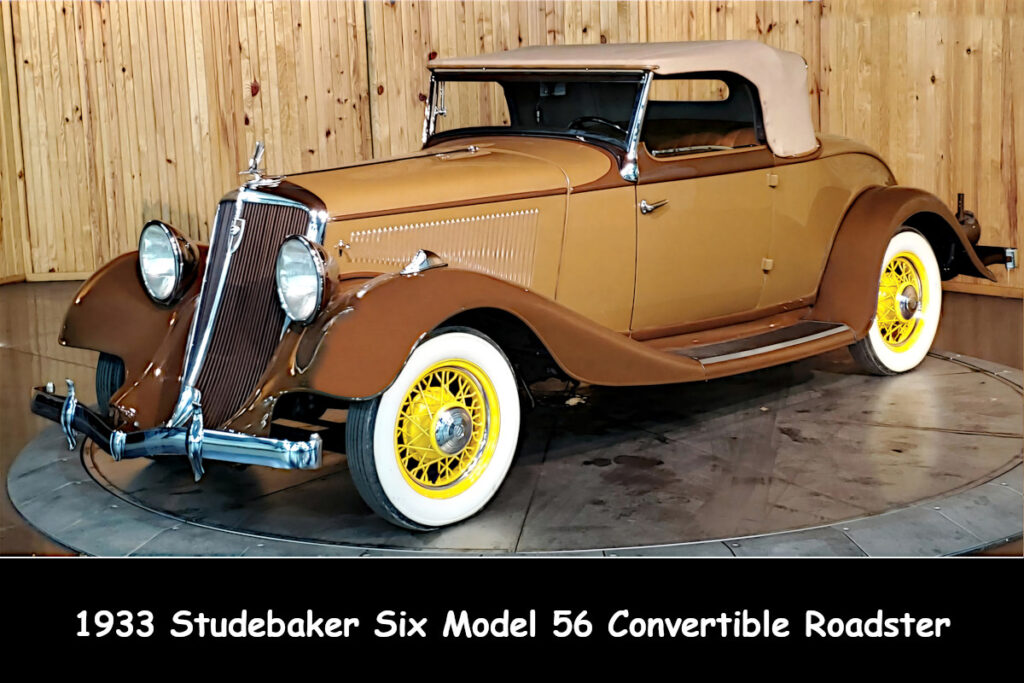
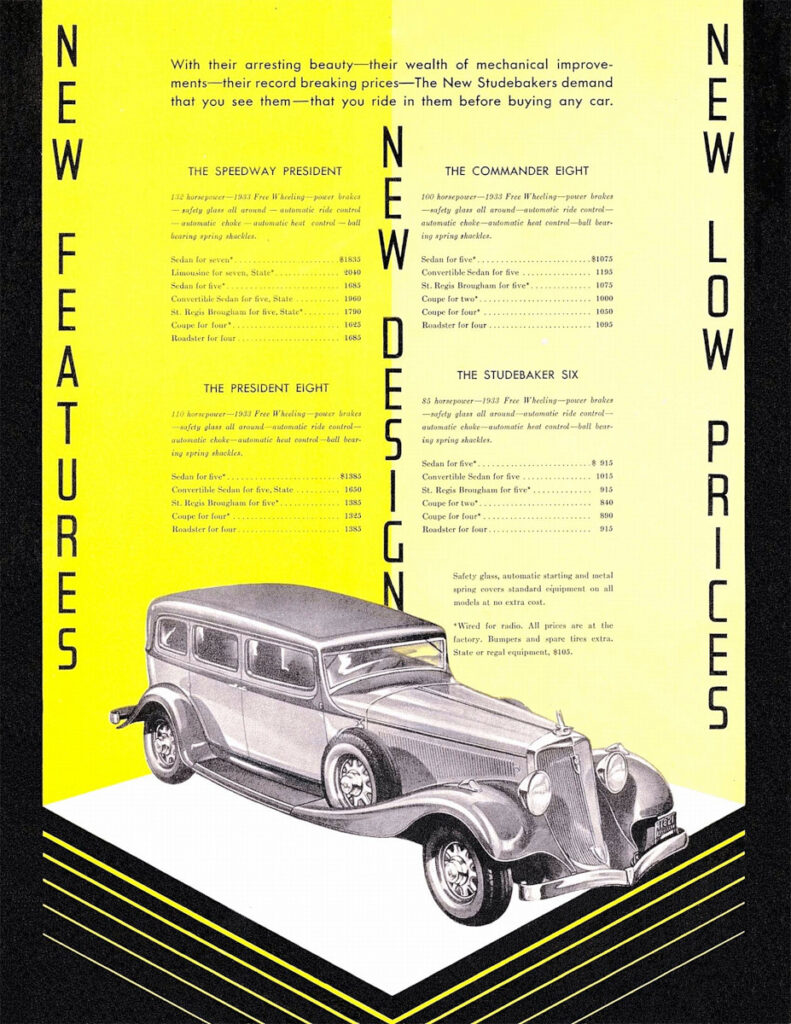
The 1933 Studebaker Six Model 56 was given a HP increase to 85 from 80.  Downdraft carburation, automatic manifold heat control valve, fully automatic spark control, automatic choke, and vacuum-boosted brakes are new features. 

Wheels were reduced from 18 inches to 17 inches,with five painted wire wheels being standard on regular models. Six chrome plated artillery wheels were standard on Regal Trim. The artillery wheels were an extra cost option on regular models. Chrome wire wheels were available as an extra cost option. Another popular option, for those who could afford them, were white wall tires.

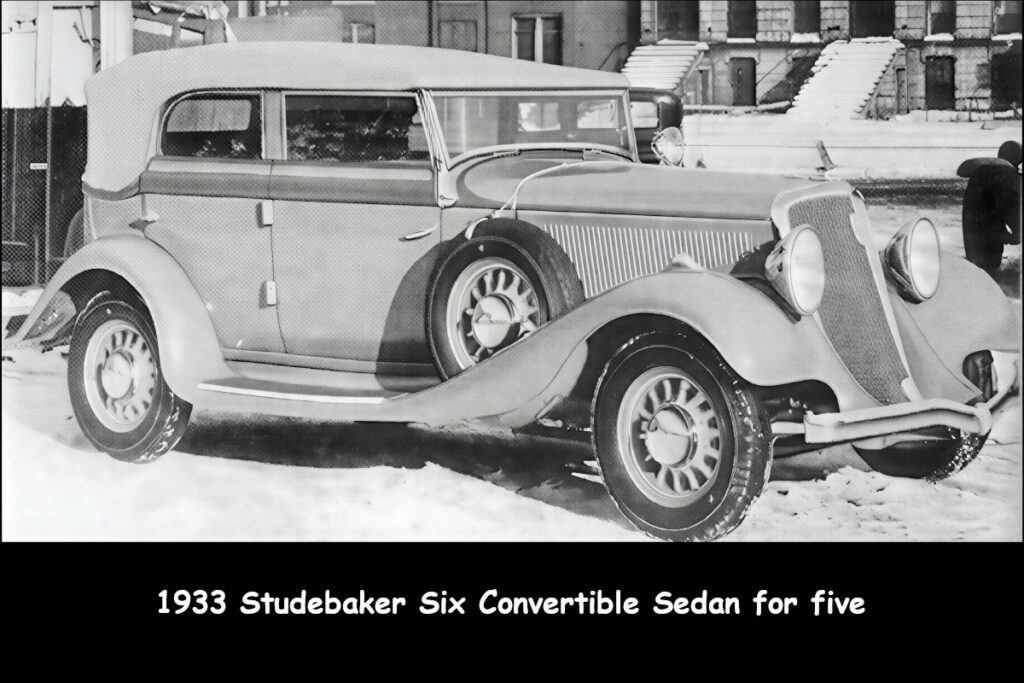
The model line-up is the same as 1932.  Studebaker goes into receivership and sales would be at an all time low.  Scarcely 6,500 Studebaker Six would be made, which is a shame as very few of these “Most classic cars ever produced by Studebaker”, survived.  This is the last year for the Studebaker Six as the Six and the Rockne would become the new Dictator Six in 1934.


Tells for 1933 Studebaker Six Model 56 cars are a new much more forward sloping grille and much longer skirted front fenders that helped hide more of the chassis. The artillery wheels (when equipped) had 14 steel spokes, 1932 cars had ten spokes. The basic bodies remained little changed from 1932.

References
  • Studebaker the Complete Story, by William A. Cannon and Fred K. Fox
  • 1933 Studebaker Cars by Fred Fox – Turning Wheels December 1991

SACA=Standard Catalog of American Cars – TCCD=The Classic Car Database

1932 Studebaker Six Model 56 Body Code Price Serial
Number
Engine
Serial
Number
Both SCSA & TCCD put Model 56 production at 6,861 units.  Fox production Number for SB is  6,862 and Can 126 for a total of 6,998   From
TCAC
From
Studebaker
Ads
From
TCCD
SB 5,133,401 to 5,140,262
Can 5,953,741 to 5,953,866
S63,001 to 70,000
Roadster Convertible 2 door 2/4 Pass R1 $915   $915    
Roadster Regal Convertible 2 door 2/4 Pass R2 $1,020   $1,020    
Coupe 2 door 2 Pass Q1 $840   $840    
Coupe Regal 2 door 2 Pass Q3 $945   $945    
Coupe Sport 2 door 2/4 Pass Q3 $890   $890    
Coupe Regal Sport 2 door 2/4 Pass Q4 $995   $995    
Sedan St. Regis Brougham 2 door 5 Pass C1 $915   $915    
Sedan Regal St. Regis Brougham 2 door 5 Pass C2 $1,020   $1,020    
Sedan Convertible 4 door 5 Pass S1 $1,015   $1,015    
Sedan Regal Convertible 4 door 5 Pass S2 $1,120   $1,120    
Sedan 4 door 5 Pass W1 $915   $915    
Sedan Regal 4 door 5 Pass W2 $1,020   $1,020    
Upholstery Materials
1933 Studebaker Six
Bedford CordStandard on all closed models and optional on four-door convertible sedans
Mohair$7.00 extra cost on all closed models
LeatherStandard on roadsters and optional on four-door convertible sedans.
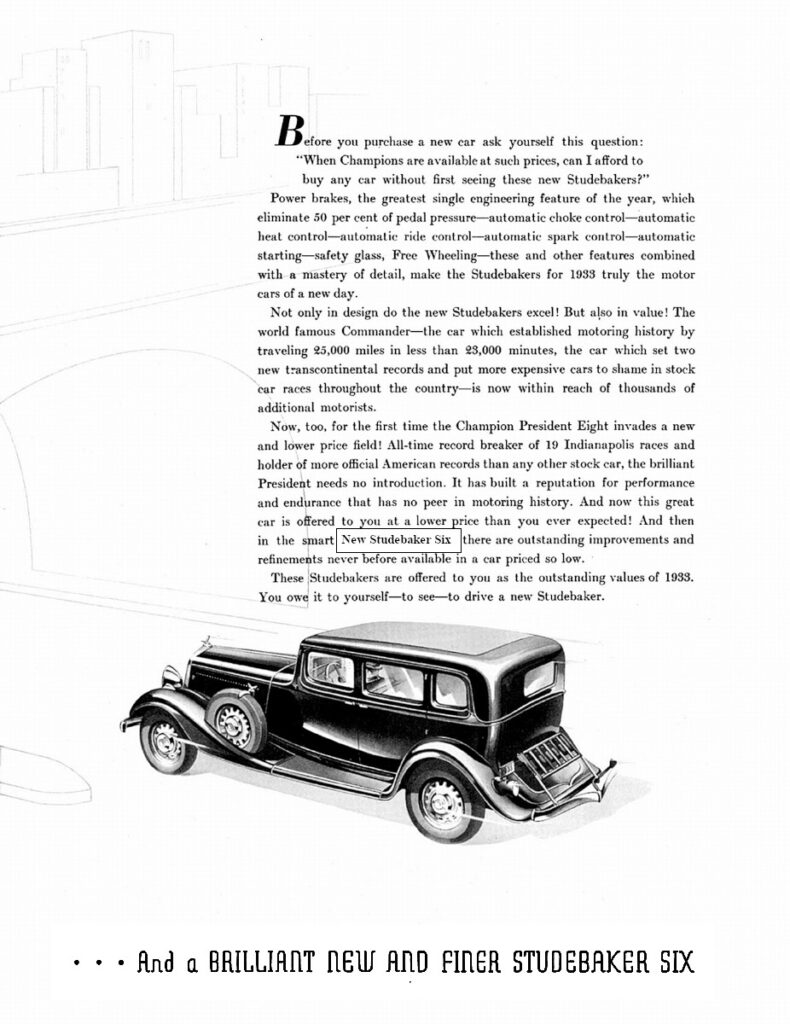
From the 1933 Sales Brochure