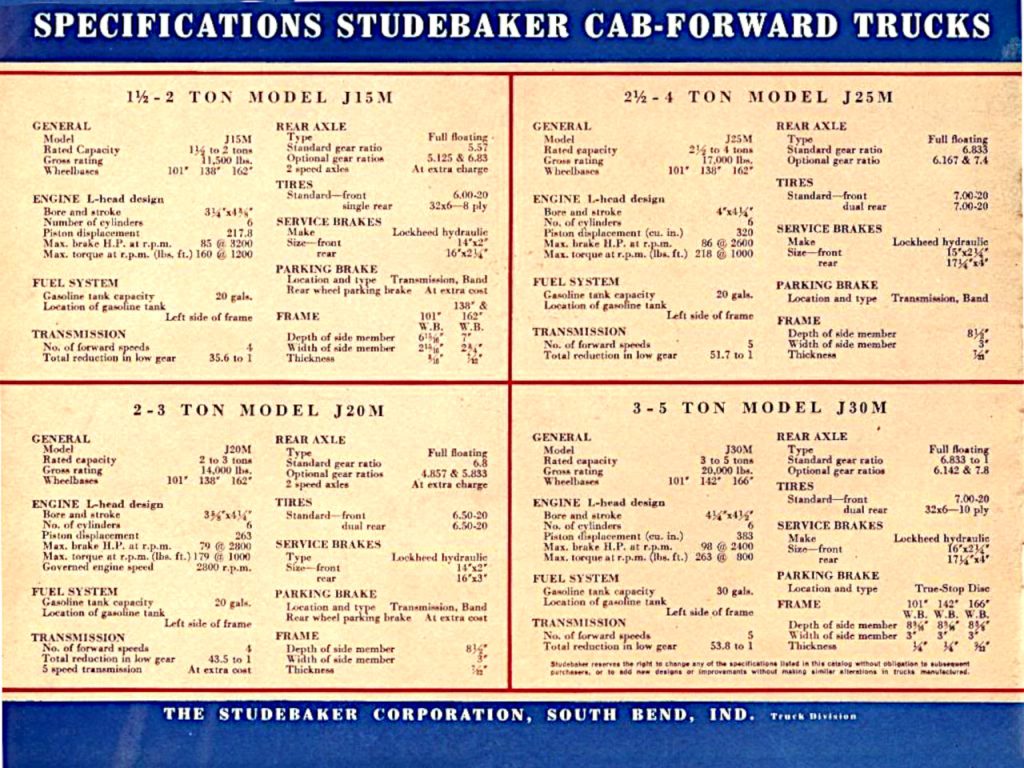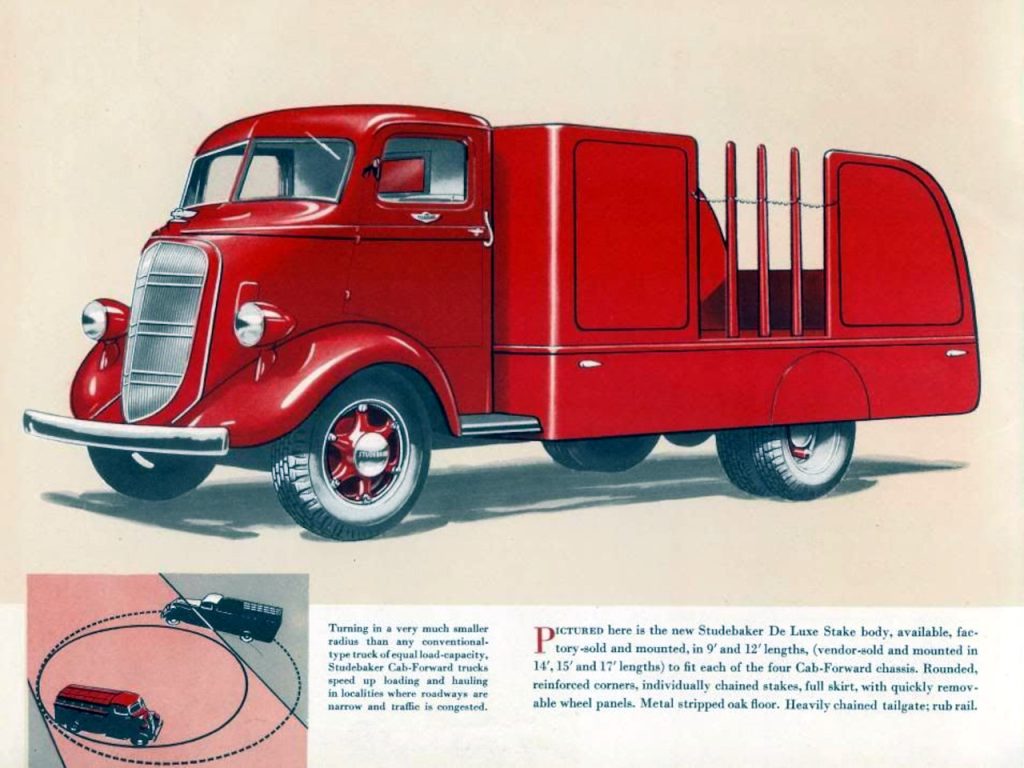
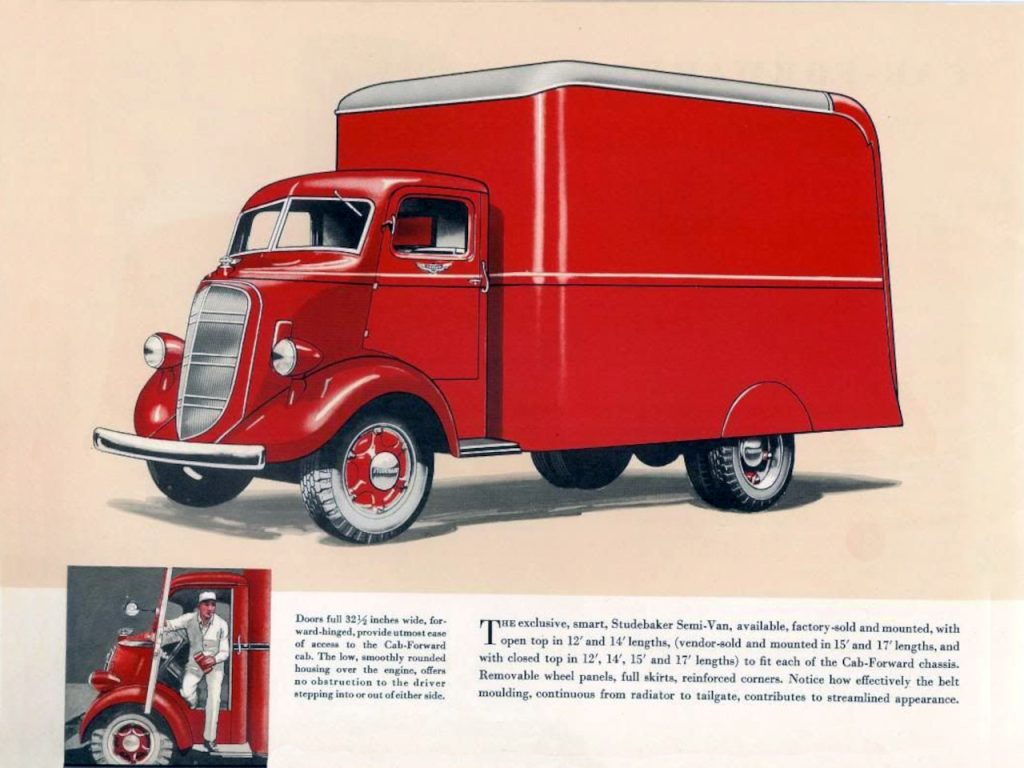
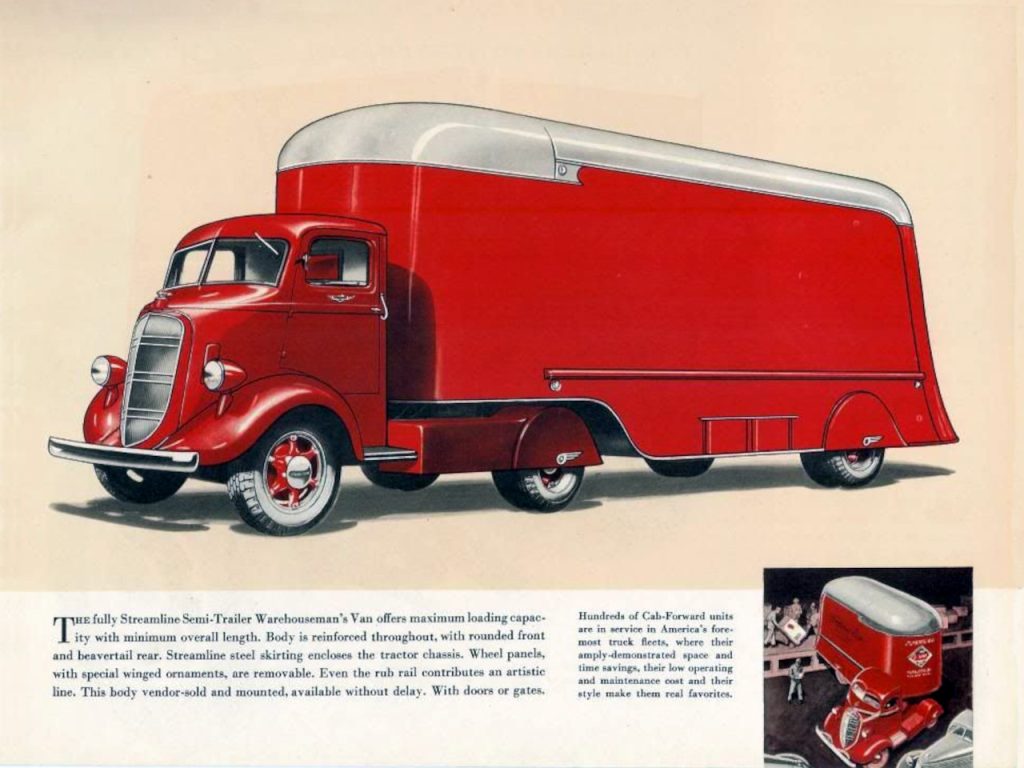

 In January of 1937 production of the J-Series trucks and buses starts. The standard trucks get a new cab loosely based on the 1937 car line. This cab is an all metal unit. The Cab-Forward trucks would continue to use the 1936 cab, wood frame with steel sheathing. Both series get a new grille, now with three sets of two horizontal cross bars. The J-5 Coupe Express discussed below did not use this grille, but rather used the Dictator car grille. The “Coupe Cab” however was shared with the Coupe Express and the Standard-series trucks, thus both have wind wings which no other American made truck would have until after WW II.
The big news for 1937 was actually the release of the Coupe Express ½-ton pickup which is based on the  1937 Dictator passenger car. A limited market for a light-duty pickup and a price 15 percent above the competition did limit the success of an otherwise extraordinary vehicle, which is in great demand today. Nevertheless 3,500 were built in South Bend with another 375 being assembled in Studebaker’s new Vernon, California plant between January and July of 1937. Information about the J-5 Coupe Express will be found in the car line as Studebaker considered the Coupe Express to just be another car model. A few of the Coupe Express trucks were actually manufactured as woody station wagons, the number is unknown and we expect none have survived. Also in 1937 Studebaker would change from Waukesha engines to Hercules engines for it’s larger trucks and offer a diesel engine option for the first time.
1937 Dictator passenger car. A limited market for a light-duty pickup and a price 15 percent above the competition did limit the success of an otherwise extraordinary vehicle, which is in great demand today. Nevertheless 3,500 were built in South Bend with another 375 being assembled in Studebaker’s new Vernon, California plant between January and July of 1937. Information about the J-5 Coupe Express will be found in the car line as Studebaker considered the Coupe Express to just be another car model. A few of the Coupe Express trucks were actually manufactured as woody station wagons, the number is unknown and we expect none have survived. Also in 1937 Studebaker would change from Waukesha engines to Hercules engines for it’s larger trucks and offer a diesel engine option for the first time.This side hood badge was used on the J-series trucks starting in January of 1937. It is the best tell to identify 1937 trucks. The 2T, 2W, and 2M series production trucks
 overlapped the J series by four months, so not all 1937 trucks would wear this badge.

A second tell for 1937 trucks is the simple round smooth hubcap with “STUDEBAKER” seen on J series trucks.